Why the Inverted Pyramid Puts the Newest Detail First
The inverted pyramid puts the latest development first, so you can identify what changed, distinguish decisions from proposals and follow the context clearly.
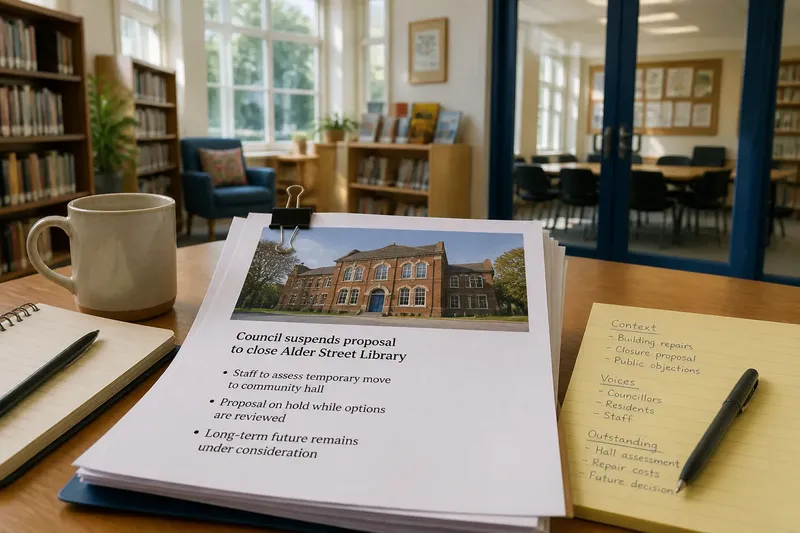
The inverted pyramid puts the latest development first so readers can tell what changed before sorting through background. In a report about a council’s library decision, that means opening with the action actually taken—not with an old dispute or a prediction about what may happen next.
This structure is an editorial choice, not a promise that the first paragraph contains the whole story. It gives the report a clear starting point, then adds the context, competing interpretations and limits that show how much the news really establishes.
The inverted pyramid starts with the event that changed
A useful lead identifies the central development, the person or body responsible and the immediate consequence. If councillors suspend a proposed library closure, the report should say that plainly. It should not say the library is saved unless the decision actually settles its future.
The distinction matters because readers often meet a story through its opening lines. A precise lead gives them a reliable handle; a sweeping one can turn a limited decision into a bigger claim than the facts support.
Context explains what the lead leaves out
Once the event is clear, the report can explain why it happened and what preceded it. In the library story, that might mean describing the repair concerns, the original closure proposal and objections raised before the meeting.
Good context is selective. It answers questions raised by the lead rather than piling on every detail from the past. The opening is like a label on a folder: it tells you which decision the pages inside help explain.
Attribution separates actions from interpretations
News reports need to distinguish what happened from what people say it means. “The council suspended the closure proposal” describes an action. “The council saved the library” interprets that action and may overstate it if the branch’s future remains unsettled.
Attribution shows readers whose interpretation they are hearing. Councillors might say the pause gives staff time to assess alternatives; a supporter might call it a victory; a facilities officer might point out that repair issues still need attention. These comments can illuminate the disagreement without replacing the report’s account of the formal decision.
Voices also have different kinds of authority. A resident can describe what the branch means to local families, while an official decision document can establish what the council agreed to do. The report’s structure should keep those contributions distinct.
Read the lead, context and caveats together
Why does the newest detail come first?
It tells you what makes the report timely before asking you to absorb its history. The following paragraphs then explain what led to the change.
Does the opening contain the whole story?
No. A lead establishes the central development, but later details may qualify its scope or explain what remains unsettled. Read beyond it before deciding what the event means.
How can I distinguish a decision from a prediction?
Look for the action that has already occurred and who took it. “Staff will consider another site” describes a possible next step; it is not the same as an approved plan to move services.
Can the structure make an uncertain outcome sound settled?
It can, especially if the opening uses a broad claim and later paragraphs quietly narrow it. Check whether the report clarifies what the decision covers and what is still open.
Work through a concrete library report
Imagine a report whose lead says: “The council has suspended its proposal to close Alder Street Library while staff assess whether services could move temporarily to a nearby community hall.” The starting information is specific: a proposal is suspended, the council acted, and staff have been asked to assess an option. The sentence does not say the library is saved or that a move has been approved.
Now follow the report’s structure. First, note the immediate result: the closure proposal is not proceeding on its previous course for now. Next, read that staff are assessing the hall; treat this as an assessment, not a decision. Then read the background about building repairs and public objections, which explains why the proposal arose. Finally, compare attributed comments with the formal action: a supporter’s description of a victory is an opinion, while the council’s recorded pause is the decision.
The resulting account is narrower but more useful than either “the library is saved” or “the library is closing”. The proposal has been suspended, an alternative is under assessment, and the branch’s long-term future remains undecided. Each detail changes the answer only as far as its wording allows.
Use the report’s order to check what it supports
- Check the verb in the lead. If it says “approved”, treat the action as approved; if it says “proposed” or “is considering”, keep it in the category of possible action.
- Check who made the decision. If the report names the council or another responsible body, attribute the action to it; if no decision-maker is identified, look for clarification before treating the claim as settled.
- Check the stated consequence. If the lead says a service is suspended, describe that immediate change; if it only says staff will assess an option, do not report the option as an outcome.
- Check what the background explains. If repair concerns are linked to the proposal, treat them as context; if the report gives no link, avoid presenting them as the reason for the decision.
- Check whose words express an interpretation. If a supporter calls the pause a victory, attribute that view; if the formal decision remains limited, keep the report’s description limited too.
- Check for unresolved language near the end. If the report says the branch’s future is still under review, leave the outcome open; if it records a final decision, describe that decision rather than relying on earlier uncertainty.
When you read an inverted-pyramid report, follow the latest development into its context, then check which claims are actions, interpretations or unresolved possibilities. That simple habit helps you see not only where the story begins, but also where its evidence stops.